
7 Ways to Finance a Property Purchase in Mexico

Financing in Mexico
One of the first questions we get from buyers looking at property in Los Cabos is simple: how do people actually pay for this? In the U.S., the answer is usually a conventional mortgage. In Mexico, the answer is more complicated—and understanding your options early can save you a lot of time and frustration later.
Here are the seven main ways buyers finance real estate in Mexico today, along with what each one actually costs and who it tends to work best for.
1. Developer Financing
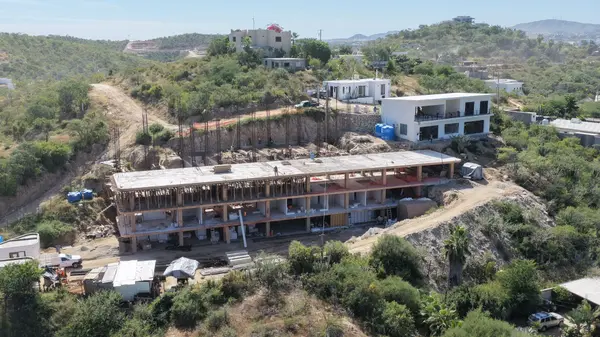
Developer financing applies specifically to pre-construction properties, where the developer itself extends financing directly to the buyer. A few years ago, this was fairly common—roughly 20% of developers in the Cabo market offered some form of in-house financing. Today it's much less common, though it hasn't disappeared entirely.
When available, developer financing generally runs around five years (occasionally stretching to ten) at interest rates in the 7–8% range, typically with no prepayment penalty. If you're specifically shopping pre-construction inventory, it's worth asking every developer directly whether they offer financing through their own accounts—it's not something they always advertise up front.
2. Cross-Border Lenders
Cross-border lenders—companies like MoXi and Intercam—offer traditional, fixed-rate mortgages to foreign buyers purchasing in Mexico. These have genuinely improved over the past several years, but the fees and rates are still higher than most American buyers are used to.
Where a U.S. lender might charge an underwriting fee around half a percent, a cross-border lender might charge closer to 2%. Closing costs tell a similar story: a transaction that might run $35,000 in closing costs through a standard process can climb to $60,000 once you factor in the requirement to use the lender's own attorneys. Because of costs like these, only about 10% of the buyers we introduce to cross-border mortgage options end up actually using them. That said, we expect this space to keep improving—rates and fees should become more competitive and these products more widely available over time. For now, they remain less cost-effective than a typical U.S. mortgage.
3. Seller Financing
Seller financing is exactly what it sounds like: the seller acts as the lender. Terms typically run three to five years at around 7% interest in the current environment.
The important thing to understand is the psychology behind it. Sellers who agree to carry financing generally view it as doing the buyer a favor—which means they have much less incentive to negotiate on price. In practice, buyers who use seller financing tend to end up paying closer to full asking price. We've seen this work for buyers who are genuinely motivated to structure it this way, but most buyers, when they have the choice, prefer to bring cash to closing instead.
If you do pursue seller financing, make sure it's properly protected. An attorney can structure the contract so the seller retains the deed (or an equivalent security interest) until the buyer has paid the property off in full—protecting the seller in the event of a default.
4. Home Equity Line of Credit (HELOC)
A HELOC lets buyers borrow against equity in a home or other property back in the U.S., and it was a popular option in the years following the pandemic, when rates sat around 3–4%. The catch: nearly all HELOC loans carry variable rates.
Buyers who took out HELOCs at 3–3.5% found themselves in a difficult spot when U.S. interest rates roughly doubled in 2021–2022, pushing those same loans to 6–7%. That shift has made HELOCs a much less attractive option in the current rate environment, even though they remain a viable source of financing for buyers who have significant equity built up in U.S. property.
5. Mexican Bank Financing
Mexican bank financing is, realistically, an option reserved for Mexican citizens—and occasionally dual citizens or Americans who have established credit history inside Mexico. The reason is straightforward: a U.S. or Canadian buyer typically doesn't have the Mexican credit history a local bank requires.
We've seen a meaningful number of Mexican nationals using bank mortgages to purchase property here, often driven as much by tax and estate-planning considerations as by financing needs. Even so, a Mexican borrower with strong credit is currently looking at double-digit interest rates—somewhere in the 10–11% range—through a Mexican bank. For most American or expat buyers without Mexican credit history, this simply isn't an available path.
6. Private Lenders
Private lending is a newer but growing piece of the market. These lenders operate similarly to cross-border mortgage companies, pricing in risk the way a private equity firm or venture capital lender would back in the U.S.—which generally means higher interest rates than a conventional cross-border mortgage.
In most cases, a standard cross-border mortgage lender—one with an established process already in place for foreign buyers—ends up being the more prudent choice. That said, well-capitalized buyers sometimes have access to private credit relationships that can make sense on a case-by-case basis.
7. Borrowing Against Stock and Investment Accounts
The last major path we see is buyers tapping into their own investment assets rather than borrowing from a Mexican or cross-border lender. Some buyers use a self-directed IRA to purchase real estate in Mexico—typically buyers with substantial existing assets who are comfortable navigating the rules involved. It's important to note this route is intended strictly for investment property, not personal use, and comes with real limitations. Anyone considering it should talk with a financial advisor before moving forward.
Others borrow directly against a brokerage account—for example, a Merrill Lynch or Morgan Stanley account with significant assets—paying an interest rate on the loan while keeping their investments intact. We've seen buyers with substantial account balances use this approach successfully to fund a Mexico purchase.
The Bigger Picture: Financing Is the Real Difference
In the United States, somewhere around 60–70% of home purchases involve bank financing, even though that's gotten harder with today's rates and prices. In Mexico, by contrast, roughly 10% of property purchases involve any form of financing at all. The rest are cash transactions.
That gap is worth sitting with. If you're used to the U.S. market, it's easy to assume financing will be readily available once you're ready to buy—but in Mexico, financing is the exception rather than the rule. Of all the differences between buying real estate in the U.S. and buying in Mexico, access to financing is arguably the single biggest one.
None of this means financing is impossible—it means it takes more planning. Understanding which of these seven paths might actually apply to your situation, well before you're under contract, is one of the most useful things a buyer can do.
Contact Fletcher Wheaton for help buying real estate in Mexico.
This article is intended as general information, not financial or legal advice. Financing terms, rates, and availability change over time and vary by lender, buyer, and property—speak with a qualified financial advisor and a Mexican real estate attorney before committing to any financing structure.
Categories
- All Blogs (238)
- Agent Training (5)
- Cabo Golf (12)
- Cabo Legal (36)
- Cabo Real Estate (105)
- Cabo Restaurants (3)
- Commercial Real Estate in Cabo (4)
- Construction (18)
- Destination News (21)
- East Cape (8)
- Financing (4)
- Land Banking (2)
- Loreto (2)
- Luxury Homes in Cabo (11)
- Market Report (5)
- Mulege (2)
- Neighborhoods (3)
- Pre-Construction (17)
- Remexico Real Estate Agents (5)
- Residency (2)
- Sports (6)
- Taxes (5)
- Todos Santos (7)
Recent Posts






GET MORE INFORMATION
